

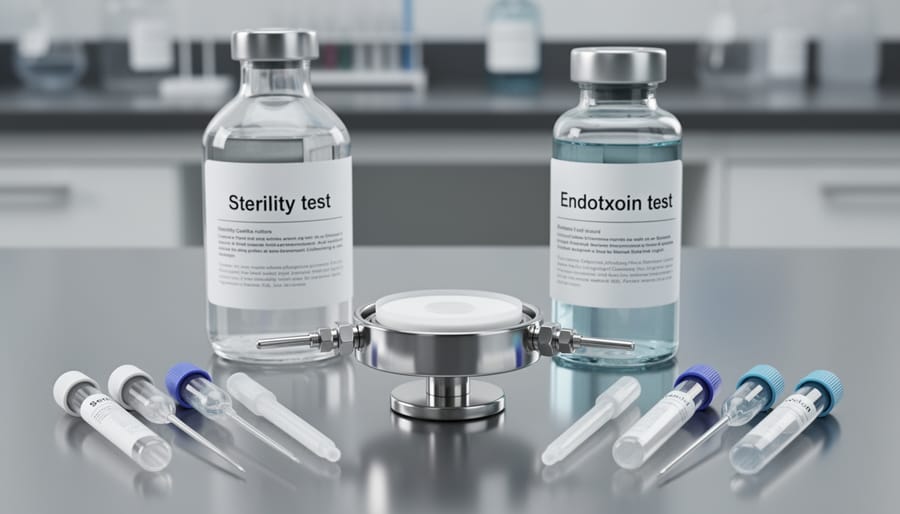
Endotoxin testing and sterility testing are the two checks that tell you whether a batch of research peptides from a supplier like www.kylopeptides.com was made and handled cleanly. Endotoxin testing looks for fragments of bacterial cell walls that can linger even after the bacteria are gone. Sterility testing checks whether living microbes are present at all. A credible batch comes with documentation for both, and you’re entitled to ask to see it.
If you’ve ever watched a sound engineer trace a hum back to one bad cable, you already understand the logic. Quality problems hide in the details nobody checks, and a certificate of analysis is only as good as the testing behind it. Suppliers that publish testing information let buyers judge that paperwork for themselves, and learning to read it is a skill worth having.
This article is educational only. It doesn’t cover dosing, sourcing advice or human use, and nothing here is medical guidance. Research peptides are labelled for laboratory use, and that label is a boundary, not a loophole.
Key Takeaway: Batch documentation is something you can request, and a trustworthy supplier will provide it. Once a product is in your hands, responsibility for storing and handling it properly is yours. “Research use only” marks a firm limit on what the product is for, so treat it that way.
Below, we’ll define each test in plain language, outline what credible paperwork looks like, and point you to Canadian resources for questions that go beyond this guide.
What Endotoxin Testing and Sterility Actually Mean for a Research Peptide

Endotoxins vs. Sterility: Two Different Questions
Think of it as two separate questions asked about the same vial.
Sterility testing asks, “Is anything alive in here?” It checks whether living microorganisms, such as bacteria or fungi, are present in the material. A sterile result means nothing is growing, and that’s a useful thing to know.
Endotoxin testing asks a different question: “Did anything leave harmful residue behind?” Endotoxins are fragments from the cell walls of certain bacteria. They can stick around long after the bacteria themselves are gone, which means a batch can pass a sterility check and still carry them. It’s a bit like a room that’s finished being noisy but still has a faint hum coming from somewhere you can’t quite place.
That’s why a single clean result isn’t the whole picture. For injectable-format lab materials, residue can matter just as much as live contamination. In cell-based research, even small amounts of endotoxin can interfere with how cells behave, which can quietly muddy results.
Both checks together give a fuller view of batch quality. As always, this is educational information about laboratory standards, not medical advice, and research-grade peptides aren’t approved for human use.
How the Testing Is Done
Think of the two tests as two different microphones pointed at two different problems.
For endotoxins, the long-standing method is the LAL assay. LAL stands for Limulus amebocyte lysate, a clotting agent made from the blood cells of horseshoe crabs. When it meets endotoxin, it reacts, and labs read that reaction as a gel clot, a change in cloudiness or a colour shift. Newer recombinant alternatives do the same job using lab-made proteins instead of crab-derived material, which many labs now prefer. Either way, the result is reported in EU/mL, so you can see how much endotoxin was detected in a given volume.
Sterility testing asks whether anything is still alive. There are two common routes. With membrane filtration, the sample is passed through a very fine filter that catches any microorganisms, and the filter is then placed in growth media and watched for signs of life. With direct inoculation, a portion of the sample goes straight into the growth media. In both cases, the media sits for a set period, and cloudiness or visible growth signals contamination.
The useful takeaway is that a credible report names the method it used. If a certificate says “tested” without saying how, that’s a gap worth noticing. This is general education on lab quality standards, not a how-to, and it isn’t guidance for human use.
What a Trustworthy Batch Looks Like: Standards and Requirements to Look For
Reading a Certificate of Analysis Without a Science Degree
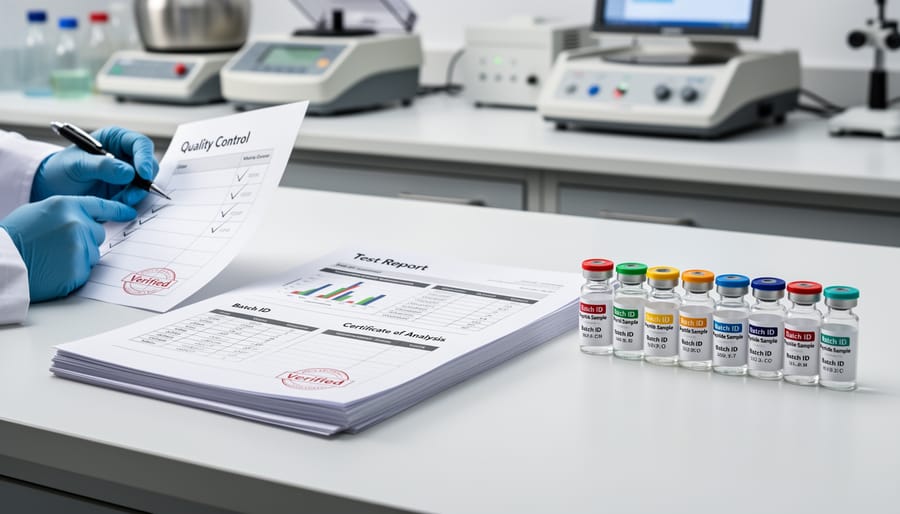
A certificate of analysis, or COA, looks intimidating until you treat it like the spec sheet that comes with a new mixer or pedal. You’re not trying to become a chemist. You’re checking that the paperwork actually describes the thing in front of you.
Start with the lot number. It should be printed on the COA and match the label on your vial exactly, because a COA only speaks for the batch it was written for. Next, look for the lab name, ideally an independent third party, plus the dates the tests were run. Then find the methods. For endotoxins, you’ll often see the LAL assay or a recombinant equivalent named. For sterility, look for the approach used, such as membrane filtration. Finally, check the results. Endotoxin figures are typically given in EU/mL, and a number without a unit tells you almost nothing.
Here’s a quick checklist you can run in a minute:
- The lot number matches the one on your vial.
- An independent lab is clearly named.
- The testing method is stated, not just “tested.”
- Results appear with proper units.
- The test date falls within a sensible window.
- No sections are blank or missing.
If something doesn’t line up, don’t guess. A pharmacist or an accredited lab can help you interpret what you’re looking at. This is educational information about documentation, and research peptides aren’t approved for human use.
Common Warning Signs in Quality Documentation
Most documentation problems show up in patterns, much like a sloppy sound check. Once you know the common ones, they’re easy to spot, and noticing them isn’t an accusation. It’s just good habit.
Start with a generic certificate of analysis. If the same COA appears for different batches, with no lot number or the same test date every time, it probably describes a one-off result rather than the vial in front of you. A COA should be tied to a specific batch.
Next, look for what’s missing. A report that covers purity but says nothing about endotoxins or sterility has left out two of the quality markers this whole article is about. Silence isn’t a pass.
Then check for a named lab. If you can’t tell who ran the tests, there’s no way to confirm they happened or that the lab is independent.
Finally, watch for fuzzy wording. Phrases like “lab tested” or “quality verified” sound reassuring but say nothing about the method, the result, or the units. Real data names the assay, shows a number, and gives a date.
None of these signs proves a batch is poor, but several together are a good reason to pause and ask questions before relying on it.
Your Rights, Responsibilities and Legal Realities in Canada
What You Can Reasonably Ask a Supplier For
Asking a supplier for paperwork isn’t rude. It’s the same habit as asking a venue for the tech rider before load-in. A reputable seller expects it and should answer plainly, without getting defensive.
Start with a batch-specific certificate of analysis tied to the lot number on your vial, not a generic sheet recycled across products. Ask which independent lab ran each test and when. If a supplier hesitates, that tells you something too. For anything beyond documents, the responsible use basics mindset applies: slow down, verify, and don’t let hype rush you.
| Quality Marker | What It Tells You | What to Look For on the Paperwork | Common Red Flag |
|---|---|---|---|
| Endotoxin result | Whether bacterial residue is present | Method named, result in EU/mL, lot number | No endotoxin data at all |
| Sterility result | Whether living microorganisms were found | Test method, test date, pass/fail statement | Vague “tested” wording |
| Purity by HPLC | How much of the material is the target compound | Chromatogram or percentage tied to your batch | Purity shown without a lab name |
| Mass spec identity | Whether the molecule is what the label says | Measured mass matching the expected mass | Identity claimed but not shown |
| Lab accreditation | Whether the testing lab is credible | Named, independent lab with traceable credentials | Unnamed or in-house-only lab |
If the answers are clear and consistent, that’s a good sign. If they shift or stall, take that seriously. This is educational information about lab quality standards, not medical advice, and research peptides aren’t approved for human use.
Storage, Handling and Responsible Use
A clean test result describes the batch on the day it was tested. It isn’t a lifetime guarantee. Think of it like a freshly tuned guitar: the tuning is only as good as the way you look after the instrument afterward.
A few general principles apply to most research-grade materials. Temperature comes first. Many peptides are supplied in freeze-dried form precisely because they hold up better that way, and warmth, repeated thawing and refreezing, or long stretches at room temperature can break them down. Check the supplier’s documentation for the storage conditions they specify, and treat those as the baseline.
Light and moisture matter too. Prolonged exposure to either can degrade a material, so original packaging and a dry, dark space are sensible defaults.
Then there’s contamination. A vial that has been opened, handled carelessly or exposed to the air is no longer the sterile sample the paperwork described. Good sterility results can be undone in a single careless moment, and endotoxins can be introduced by unclean surfaces or equipment, so tidy handling in a proper laboratory setting is part of the quality picture.
Keep a simple record of when a batch arrived and how it was stored. That habit helps you spot problems early and ask better questions of the supplier or a qualified professional.
Research peptides are for laboratory use only, so none of this is guidance on human use.
Why This Matters to Working Musicians and the Wider Community
Anyone who’s spent time in a green room knows how fast information travels. Someone’s got a trick for a scratchy throat, someone else swears by a recovery routine, and by soundcheck half the crew has heard about it. Home-studio creators do the same thing in online groups, trading tips between takes. It’s generous and it’s very human. It also means a shaky claim can spread as quickly as a good one.
That’s where a shared habit of checking documentation pays off. When a batch of anything comes with a certificate of analysis, a named lab, a lot number and clear endotoxin and sterility results, you’ve got something concrete to look at instead of a friend-of-a-friend’s word. Asking “can I see the paperwork?” isn’t rude. It’s the same instinct that makes a tour manager confirm the rider before load-in. And when one person in a group asks that question out loud, everyone else learns to ask it too. If you’re curious how that mindset plays out more broadly, there’s a useful read on vetting wellness hype in Canada’s music scene.
Remember that research-grade peptides are for laboratory use, not for people, and nothing here replaces advice from a qualified health professional. The point is literacy, not experimentation. Our touring community is at its best when people look out for each other, and that includes sharing how to tell solid information from noise.
Suggested sidebar: a conversation with a health professional, or a working musician’s take on separating hype from facts. (Placeholder only; to be developed with a real contributor.)
We’d love to hear from you. How do you vet wellness information before you pass it along?
Where to Get Help and Verify What You’ve Been Told
You don’t have to figure out a certificate of analysis on your own. If a document looks confusing, or a claim sounds too good to check, there are real people whose job is to help. Think of it like the backstage crew at a festival: nobody expects one person to handle sound, lighting and stage safety alone.
Here’s who to turn to for what:
- Regulatory questions: Health Canada can clarify how research materials are classified and what rules currently apply.
- Health concerns: a licensed physician or pharmacist can speak to your personal circumstances.
- Lab verification: an accredited independent laboratory can explain testing methods and confirm whether results are credible.
- Reference standards: recognized pharmacopeial bodies publish the benchmarks that testing is measured against.
If you’re unsure about any document you’ve been given, bring it along. A pharmacist can often help you make sense of terminology, and a lab professional can tell you whether the methods and units on a report line up with accepted practice. Printed or saved copies of the lot number, test dates and lab name make that conversation much quicker.
This is general educational information, not medical or legal advice, and research peptides aren’t approved for human use. Regulations can change, so always confirm current rules with the official source rather than relying on a blog post, including this one.
Learning together helps too. Many of our readers pick up practical know-how at community workshops and asking good questions in a room full of curious people is a great way to sharpen your own.
Common Questions About Endotoxin Testing and Sterility
Is “sterile” the same as “endotoxin-free”?
No. Sterile means no living microorganisms are present, while endotoxin testing looks for leftover fragments from bacterial cell walls that can remain even after the bacteria are gone. A batch can pass one check and still need the other, and neither is medical guidance.
Why can’t I just rely on a purity percentage?
Purity tells you how much of the sample is the target peptide, not whether it’s clean in a microbiological sense. Think of it like a great-sounding mix that still has a hum in the signal chain: you need the separate sterility and endotoxin results to see the full picture.
Does a passing result last forever?
Not necessarily. A result applies to the specific lot that was tested, on the date it was tested, and handling or storage afterward can change things. Treat it as a snapshot of that batch, not a lifetime guarantee.
What does “research use only” really mean?
It signals that the material is intended for laboratory work and has not been approved as a drug for people. It’s a labelling and regulatory statement, so check current rules with Health Canada and talk to a licensed professional about any health questions.
Two more questions come up often. Can you test a vial yourself? Realistically, no. Sterility and endotoxin assays depend on controlled conditions, validated methods and trained staff, which is why accredited independent labs do them, and a quick at-home check wouldn’t tell you anything reliable.
As for how often batches should be retested, there’s no single answer that fits everyone. A sensible rule of thumb is that every new lot deserves its own documentation, and anything stored for a long stretch or handled poorly is worth a fresh look with a qualified lab. If you’re unsure what a report is telling you, bring it to a pharmacist, an accredited laboratory or another professional who can walk you through it.
Clean signal matters, whether you’re talking about a vocal chain on stage or a batch report on paper. When it comes to research peptides, endotoxin and sterility results are two of the clearest markers that a batch has been properly checked. One asks whether anything living is present, the other whether anything harmful was left behind. Neither answers the other’s question, and a credible report shows both, tied to a specific lot, a named lab and a clear method.
You don’t need a science degree to ask good questions. Read the certificate of analysis the way you’d read a gear spec sheet. Notice what’s missing. Check that the dates and lot numbers line up. And if something still feels murky, bring it to a pharmacist, a physician or an accredited laboratory, and confirm regulatory questions with Health Canada. Remember, this is educational information about lab quality standards, not medical advice, and research-grade peptides aren’t approved for human use.
Finally, pass along what you learn. Music communities thrive on shared knowledge, and a habit of checking the facts helps everyone. Join the Music Fest Canada conversation by signing up for our newsletter, taking our survey or tuning in to the podcast.